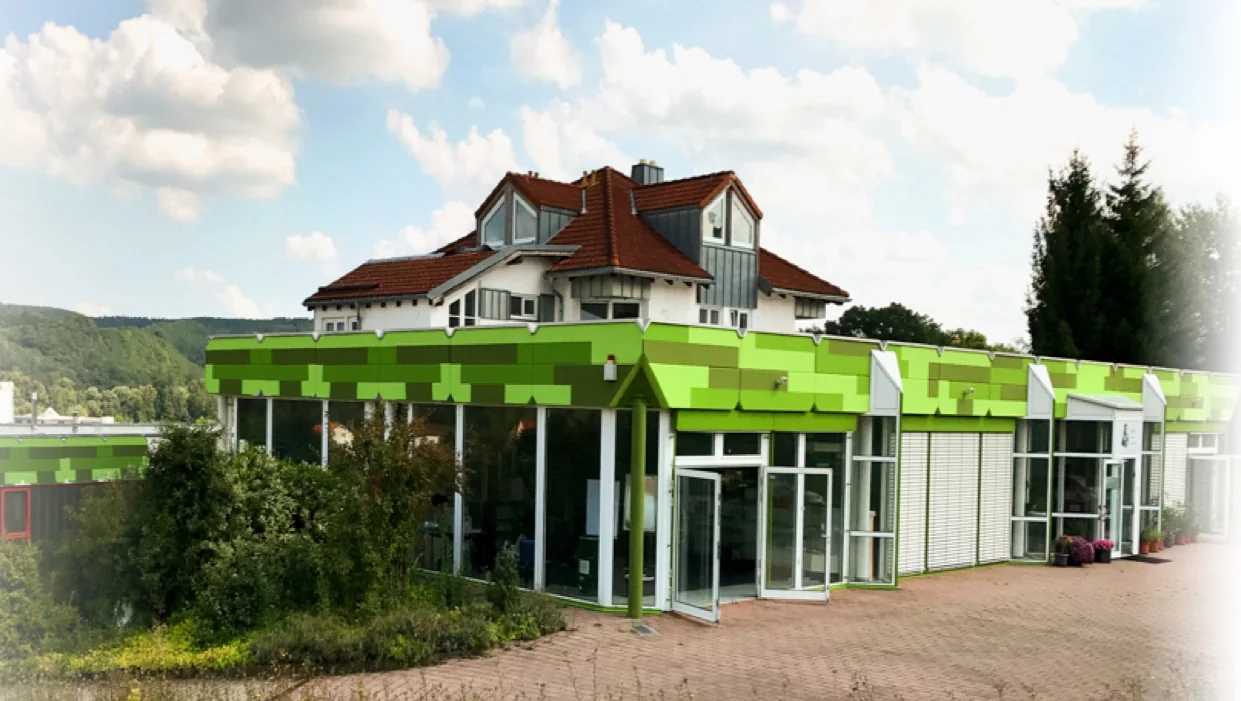
Applied environmental research from Jena since 2004
Robert Boyle Institut
RBI is an independent non-profit research institute for biohydrogen, anaerobic technology and biomass use, bridging applied preliminary research and industry.
About RBI
An independent institute between applied research and industry.
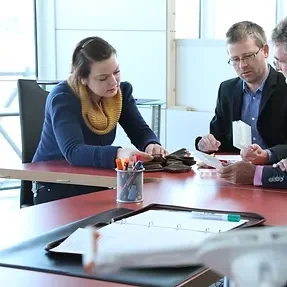
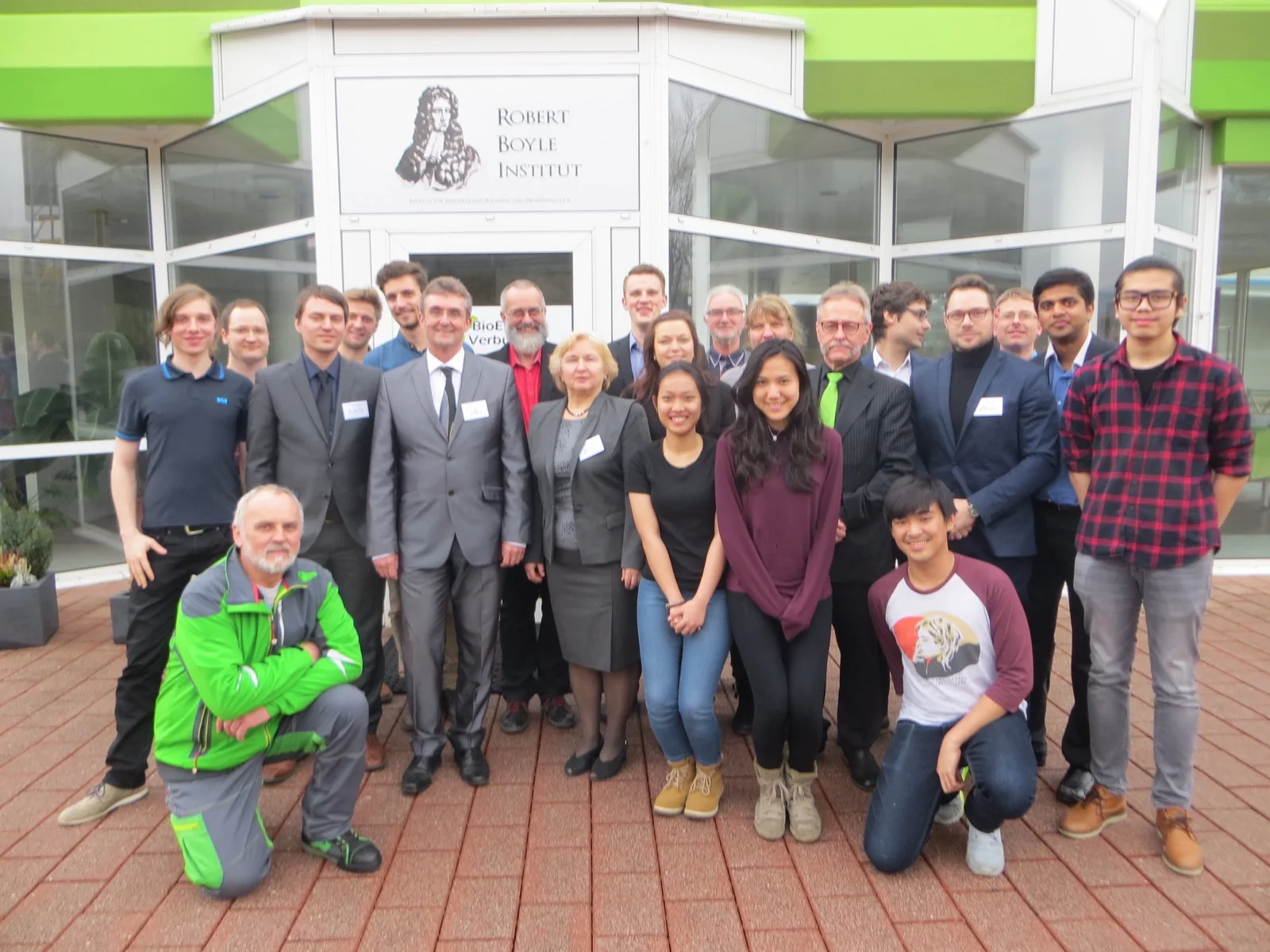
Robert Boyle - Thüringisches Institut für BioWasserstoff- und Umweltforschung e.V. is a non-profit registered association based at Im Steinfeld 10 in Jena, Thuringia. Founded in 2004, the institute receives no state base funding and finances its work through contract research and research projects.
This independence is part of RBI's credibility: the institute is recognised by the Thuringian state government as an industry-oriented research institution and works as an important link between applied preliminary research and the private sector.
RBI's scope covers research, teaching, development, industrial production, public communication, and knowledge and technology transfer.
The institute's ambition is to become one of the technology leaders in biologically produced hydrogen and to act as a competence centre for anaerobic technology and biomass use.
What sets us apart
Laboratory analytics, process biology and demonstrators for real plants.
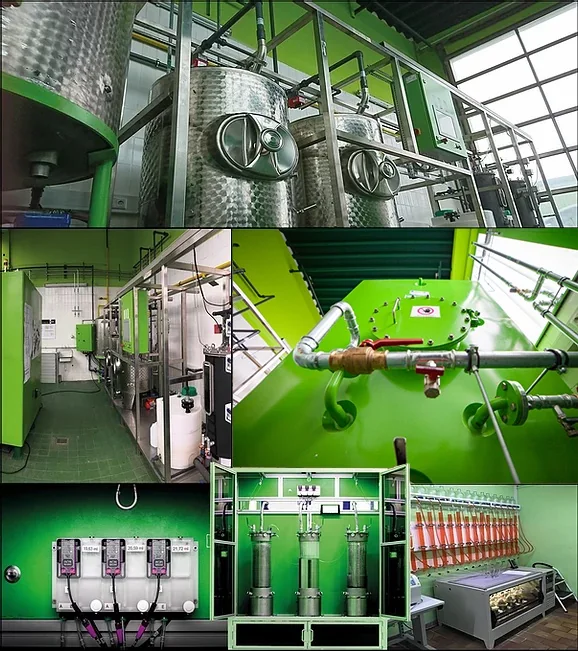
RBI is the only provider in Germany of rapid microscopic analyses of archaeal activity in biogas and wastewater treatment plants.
Analysis and studies
Laboratory analytics, experimental series, research reports, expert opinions and feasibility studies.
Prototypes and transfer
Model construction of laboratory systems, demonstrators and prototypes, with support for partner companies up to market introduction.
Customers and partners
SMEs, agricultural and municipal operators, universities, research institutions and public bodies such as municipalities.
Core technology
Microbiology and molecular biology of two-phase digestion systems, multi-phase anaerobic process control and separation of degradation steps in reaction spaces.
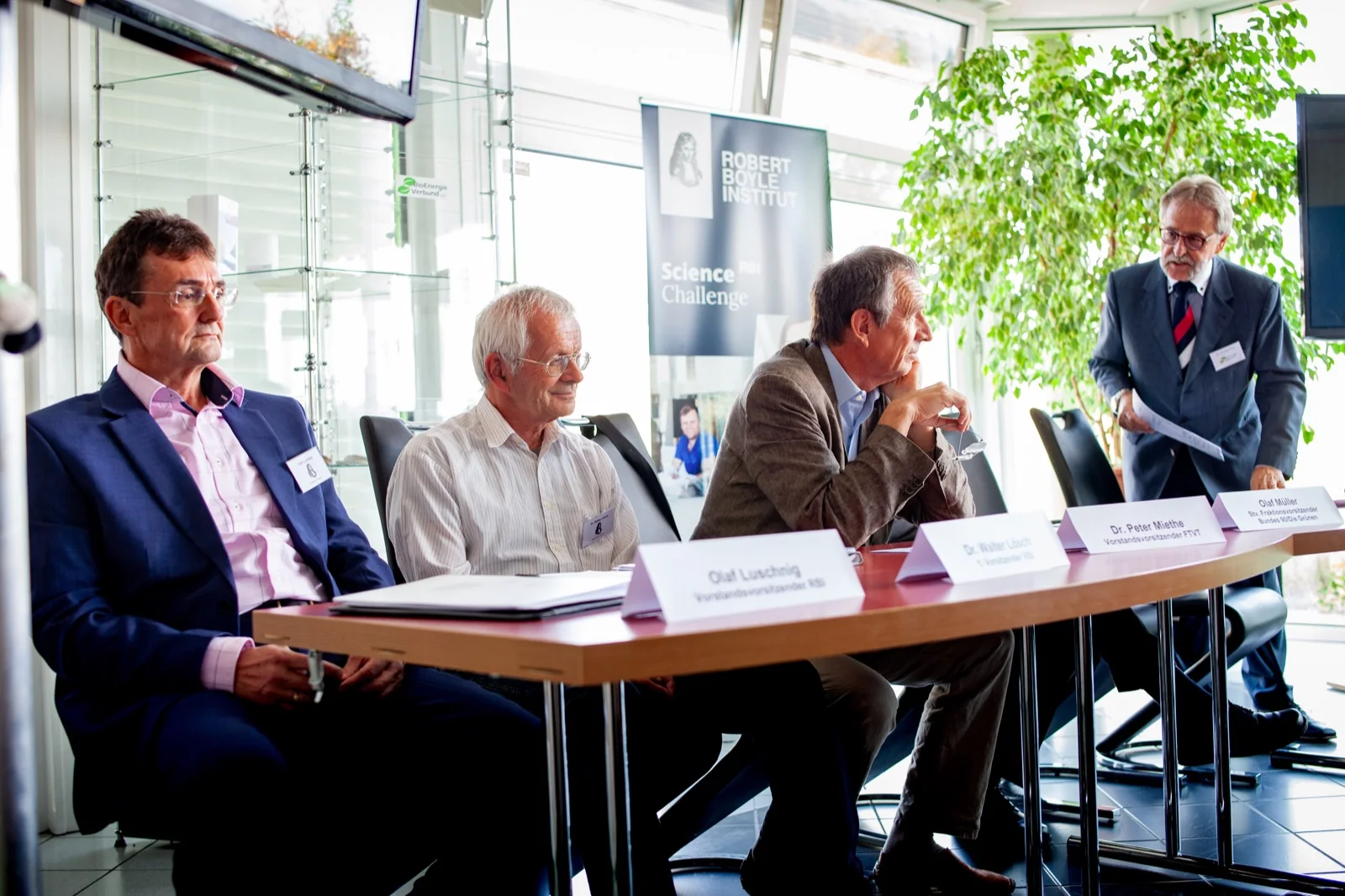

History
More than two decades of applied environmental research.
Founding of the Robert Boyle Institut in Jena.
Scientific support for the large-scale biohydrogen technical centre at FH Erfurt.
Part of the first National Innovation Programme Hydrogen and Fuel Cell Technology; this led to first international contacts in Africa and Southeast Asia and the first technology export.
Planning and project control for Malaysia's first multi-stage biogas plant, using chicken manure at 900 kW.
Conversion of the large wastewater treatment plant in Jena to energy-autonomous operation on behalf of the Federal Environment Ministry.
Admission to the Forschungs- und Technologieverbund Thüringen.
Membership in the Zuse Association, Germany's industry research network with more than 80 members.
SEAWEED DECARBON POLYMER: international network for AI-supported offshore cultivation and processing of macroalgae into biopolymers.
International reach
Research, teaching and technology transfer across continents.

For many years, RBI has worked with partners on several continents in research, teaching and technology transfer. These cooperations are historical and current institute relationships, separate from individual ZIM network projects.
Malaysia
UKM, Tasik Chini Research Center and SP-Multitech: environmental engineering chair, training container and first industrial biogas plant for chicken manure.
Nigeria
Federal University Oye-Ekiti and Friedrich Schiller University Jena: biomass potentials, research, teaching and technology transfer.
Tunisia
Centre de Biotechnologie de Sfax and Faculty of Science of Sfax: circular solutions for olive production and agribusiness.
Togo
University of Lomé: development of a research and training laboratory.
East Africa
Tanzania, Uganda and Kenya through FruVaSe with German and East African universities.
Bulgaria
Trakia University Stara Zagora: bioscience container laboratories for teaching and research.
Vietnam
Otto von Guericke University Magdeburg and Vietnamese-German University: biomass potentials and water protection with water hyacinth.
Ethiopia
DBFZ, Addis Ababa University and Jimma University: soil improvement, circular economy and mobile laboratories.
Indonesia
SEAWEED DECARBON POLYMER and education of Indonesian students with Ernst Abbe University Jena and Swiss German University.
Spain
University of Valencia: joint patent for a microbial thermoelectric cell.
Research and publications
Published science and protected process knowledge.
RBI research is documented in 15 international scientific publications from 2015 to 2025, including Biotechnology for Biofuels, Bioresource Technology, Frontiers in Microbiology, Cellulose and Carbohydrate Polymers.
Abendroth C, Hahnke S, Codoñer FM, Klocke M, Luschnig O, Porcar M (2017). Complete genome sequence of a new firmicutes species isolated from anaerobic biomass hydrolysis. Genome Announc. pii: e00686-17.
Abendroth C, Hahnke S, Simeonov C, Klocke M, Casani-Miravalls M, Ramm P, Bürger C, Luschnig O, Porcar M (2017). Microbial communities involved in biogas production exhibit high resilience to heat shocks. Biores. Technol. 249, 1074-1079.
Hahnke S, Abendroth C, Langer T, Codoñer FM, Ramm P, Porcar M, Luschnig O, Klocke M (2018). Complete genome sequence of a new Ruminococcaceae bacterium isolated from anaerobic biomass hydrolysis. Genome Announc. 6:e00030-18.
Abendroth C, Latorre-Pérez A, Porcar M, Simeonov C, Luschnig O, Vilanova C, Pascual J (2020). Shedding light on biogas: Phototrophic biofilms in anaerobic digesters hold potential for improved biogas production. Sys. Appl. Microbiol. 43:126024.
Schwan B, Abendroth C, Latorre-Pérez A, Porcar M, Vilanova C, Dornack C (2020). Chemically stressed bacterial communities in anaerobic digesters exhibit resilience and ecological flexibility. Front. Microbiol. 11:867.
Heitkamp K, Latorre-Pérez A, Nefigmann S, Gimeno-Valero H, Vilanova C, Jahmad E, Abendroth C (2021). Monitoring of seven industrial anaerobic digesters supplied with biochar. Biotechnol. Biofuels 14:185.
Atmani Z, Steindorfer T, Kargl R, Stana-Kleinschek K, Heinze T, Gericke M (2025). Allyl-functionalized polysaccharides for 3D printable hydrogels through thiol-ene click chemistry. Polysaccharides 6:13.
Gelas L, Gericke M, Heinze T, Budtova T (2025). Tuning morphology and properties of cellulose-based aerogels and xerogels by the introduction of tosyl moieties. Cellulose 32:5973-5987.
Atmani Z, Huang M, Lindemann H, Heinze T, Gericke M (2025). Functional nanogels through thermoreversible self-assembling and thiol-ene crosslinking of polysaccharide derivatives with LCST. Carbohydr. Polym. 3687:124001.
Microbial thermoelectric cell
With the University of Valencia - WO2014/049181A1
New process for fermenting biogenic energy carriers
DE102014011479A1
Selected example projects
Networks and tools that show RBI's applied work.
The following examples do not define the institute; they demonstrate how RBI turns its competence in biomass, anaerobic processes and international transfer into concrete collaborations.
Example project
SEAWEED DECARBON POLYMER applies RBI's international network management to biobased polymers from macroalgae, connecting partners in Germany and Indonesia.
National partners
Institute of Technical Chemistry, Friedrich Schiller University Jena; Oberland Metallbau GmbH; 3D Schilling GmbH; Posanova GmbH; Reichmann Biotechnik; MAEDEL METALL e.K.
International partners
Wisnu Foundation; Seadling LTD; Eco Solutions Indonesia; Udayana University. Foreign coordinator: EcoRegions Indonesia.
Milestone M1 was reached in December 2025: six network agreements signed, SWOT analysis completed, technology matrix validated and the first network meeting held on 18 September 2025 in Jena.
Example project in planning
AgriAdapt 2035
Project in planning
AgriAdapt 2035 is a planned international ZIM innovation network for climate-positive agriculture. The project is currently in the planning phase, and RBI invites qualified international partners to discuss participation.
AgriAdapt-DSS
AI-supported real-time decision system and digital twin for soil moisture and nutrient management.
Smart Injector & Living Soil
Minimally invasive biochar soil injection combined with rhizobiome inoculation for soil regeneration.
Cascade-Module
Mobile cascade use of agricultural residues: residues to hydrocolloids, biopolymers, biochar and energy.
Example tool
Return on Algae
Return on Algae is an interactive techno-economic analysis tool developed by RBI within the SEAWEED network. Network partners select an algae species and explore its value cascade across RBI process routes.
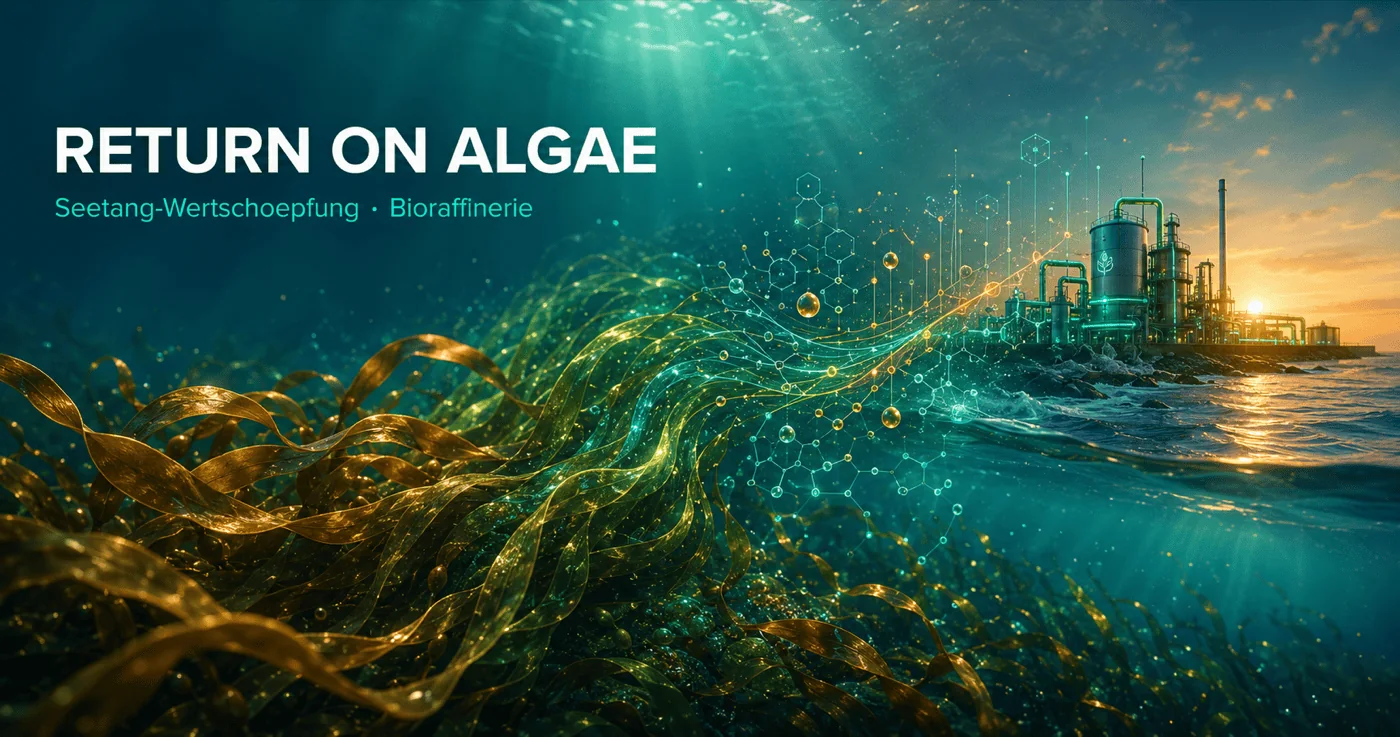
Routes include GREEN OIL biorefinery, HY2KAT hydrogen, City Heat, KATAN bio-kerosene, PAD factory/repower and biogas, with suitability classes, estimated investment costs, residence times and indicative revenue ranges per tonne of dry matter.
All figures are expressly indicative ranges based on content, yield and price. They are not validated business figures. The tool is an intermediate M2 version of the SEAWEED network; the final material-flow matrix follows in a later project phase.
Request partner accessPartner with RBI on applied environmental research and technology transfer.
RBI welcomes research organisations, companies, public bodies and international partners interested in anaerobic technology, biohydrogen, biomass use and circular bioeconomy.
Contact